

Product Documents |
|
| ACETIC ACID CERTIFICATE OF ANALYSIS | |
What is Acetic Acid?
Molecular Formula (Acetic Acid); CH3COOH
Molecular Weight; 60.05 g/mol
Chemical Name; Ethanoic Acid
CAS Number; 64-19-7
It is also known as Ethanoic Acid. It is commonly referred to as vinegar acid. It has a sour taste and a pungent odor. It is a type of carboxylic acid and is one of the simplest carboxylic acids. The simplest of the carboxylic acids is Formic Acid. Acetic Acid determines the strength of vinegar.
It is a synthetic carboxylic acid with antibacterial and antifungal properties.
It is a colorless liquid or a crystalline solid. The pH value of Acetic Acid varies between 2.5 and 3.5 depending on its normality.
Its pure (100%) form is called glacial acetic acid. It is a weak organic acid that is mixed with water in various proportions.
Glacial Acid, in its concentrated state, is pure acetic acid with a concentration of 99.5%. It is the main acid in vinegar. The glacial form freezes at approximately 17 °C.
Other Names Include;
- Ethanoic Acid
- Glacial form
- Ethylic Acid
- Methanecarboxylic Acid
- Acetic Acid, Glacial
- Acetyl Alcohol
- Pyroligneous Acid
- Ethoic Acid
- Ethanoate
- Glacial Acetate
- Ethylate
- Vinegar
What are the Physical and Chemical Properties of Acetic Acid?
Its boiling point is 118.1 °C.
Its freezing point is 16.6 °C.
Its density is 1.0492 g/cm³. Its flash point is 37 °C.
An 80% aqueous solution of Acetic Acid freezes at -8 °C.
It has a strong vinegar-like odor. It is corrosive to metals and tissues.
It is a corrosive acid. It is also flammable.
It is stable under normal laboratory conditions.
Solubility: It is highly soluble in water.
How is Acetic Acid Produced?
The global demand is approximately 6.5 million metric tons (MT). Part of this demand is met through recycling, while the rest is produced from petrochemical feedstocks or biological sources.
It is synthesized by the catalytic oxidation of acetaldehyde.
Acetaldehyde is obtained by the catalytic hydration of acetylene or the catalytic dehydrogenation of ethanol.
Some by-products are formed during production with this method. These are formic acid and formaldehyde. These by-products are removed by distillation. After the purification process, 60% and 80% acetic acid are produced for commercial sale.
Currently, the most common production method for Acetic Acid was developed by a chemical company in the 1960s. This production involves the rhodium-iodine catalyzed carbonylation of methanol.
CH3OH + CO 》Rh/I2(Catalyst) CH3COOH
It is also produced as a by-product in the manufacturing of some industrial chemicals.
What are its Effects on Human Health?
It has chemical properties that are irritating to the skin and eyes. Therefore, personal protective equipment must be used when working with this chemical compound.
In case of contact, wash with plenty of water. Clothing that has come into contact with this chemical should be removed immediately.
The glacial form is highly corrosive. In case of contact, burns will not heal quickly. In this situation, a healthcare facility must be consulted.
If swallowed, do not induce vomiting.
How Should it be Stored?
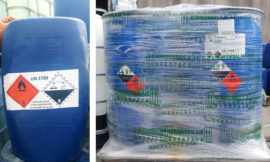
Acetic Acid has different packaging systems. The most commonly used packaging is 65 Kg. This may vary depending on the manufacturer.
For safe storage, it should not come into contact with the following chemicals.
These are;
- Chromium (IV) Oxide
- Nitric Acid
- Alcohols
- Ethylene Glycol
- Perchloric Acid
- Peroxides
- Potassium Permanganate
Contact with these chemicals can cause dangerous reactions.
It should be stored in areas that do not receive direct sunlight.
Use of Acetic Acid and Other Chemicals in Pickle Manufacturing
Pickle manufacturing is a process based on fermentation. In this process, this operation also means the preservation of some foods. The oldest food preservation techniques are drying, dehydration, and pickling. So, pickles are a result of pickling.
Pickles can be made by adding salt and/or vinegar (Acetic Acid) to food. 40% of the cucumbers produced in the world are made into pickles. That is, they are used as fermented cucumbers.
Previously, in pickle production methods using this acid, the salt percentage in fermented cucumber pickles was 4-6%. However, with developing technology and anti-hypertension practices, this has been reduced to 2-4% levels.
Naturally occurring fermentation involves the consumption of glucose and fructose, which produce lactic acid, by acid-tolerant lactic acid bacteria found on the surface of raw cucumbers.
In pickle manufacturing, to maintain the firmness of the cucumbers at an appropriate level, Calcium Chloride is used in a range of 0.1% to 0.4% alongside this chemical.
Pickles produced from a combination of Lactic Acid, Sodium Chloride, calcium chloride, and acetic acid can be stored for 1 year or longer, resulting in pickles with a vibrant appearance. Calcium Chloride helps provide better firmness than sodium chloride.
What Materials are Used in Pickle Production?
- Cucumber
- Sodium Chloride
- Citric Acid
- Calcium Chloride (Food Grade and Anhydrous)
- Potassium Chloride (Food Grade)
- Acetic Acid
What are its Areas of Use?
- It is sometimes used topically and sometimes internally as an antidote and also as a reagent.
- Acetic acid is used in the manufacture of plastic soft drink bottles.
- In the wood industry, some woods have a very dark color. Therefore, bleaching of the wood is necessary. For this, the wood surface is first cleaned of resins with denatured alcohol, then treated with Hydrogen Peroxide, Oxalic Acid and Liquid Caustic or Caustic Flakes.
- It is an important chemical reagent and industrial chemical used in the manufacture of photographic film.
- It is used as a food additive in the food industry as an acidity regulator.
- Almost all acetyl groups are derived from Acetic Acid. Acetyl groups, in turn, form the basis of biochemistry in all life forms.
- Acetic acid is used in the manufacture of polyvinyl acetate, which is produced for synthetic fibers, fabrics, and wood glue.
- At home, acetic acid is generally used as a cleaning chemical.
- Commercially, it is reacted with other chemicals to form many compounds.
- It is used in the production of Zinc Acetate.
- It is used to form cellulose acetate, which is used in making artificial silk, non-flammable motion picture film, lacquer, and plastics.
- Acetic acid is also used in the manufacture of inorganic salts. These are lead (Pb), Potassium (K), and Copper Acetates.
- It is particularly used in the manufacture of amyl, butyl acetate, propyl, ethyl acetate, and methyl acetates, which are used as solvents in quick-drying lacquers and cements.
- It is used in various industries for the manufacture of dyes, perfumes, synthetic fibers, textiles, inks, rubber, pesticides, and wood adhesives. It is also used in industrial areas for the production of various metal acetates, cellulose acetates, and vinyl acetate.
- It is used in the manufacture of some insecticides. Acetic acid is also used for blood testing in clinical laboratories.
- It is a key ingredient in many medications in the medical field. Its use in this area prevents bacterial and fungal growth. It helps reduce pain and swelling that occurs in the ear.
- It can be used as a chemical that helps control blood pressure and fat accumulation.
- It is a preservative used to prevent enzymatic spoilage in the food industry.
- Acetic acid produced by fermentation is used as an acidulant in foods. Acids have different flavor-imparting properties. Other acidulants among these are chemicals like Phosphoric Acid, tartaric acid, malic acid, citric acid, and lactic acid.
- When heat-treated wood is impregnated with solutions containing Acetic acid to protect it, decay caused by highly porous fungi can be prevented. This application is water-based.
- It can be used as an acidity regulator in the production of complementary sauces for meals, such as tomato sauce, savory sauces similar to béchamel sauce, and also in vanilla or milk-based sauces.
What Factors Affect its Price?
The stock status of companies selling Acetic Acid has a major impact on its price. As stocks increase, prices decrease.
The price of Acetic Acid varies depending on the price of acetaldehyde. As the price of acetaldehyde increases, its price increases. If the price of acetaldehyde falls, prices decrease.
Here again, it is seen that the price of Acetic acid depends on a few factors. The establishment of a new Acetaldehyde production plant will temporarily lower the price of this chemical. The selling companies generally control the market. Prices have continued with a stable increase from the past to the present.
The establishment of a new Acetic Acid production plant will cause prices to experience a temporary decline.