

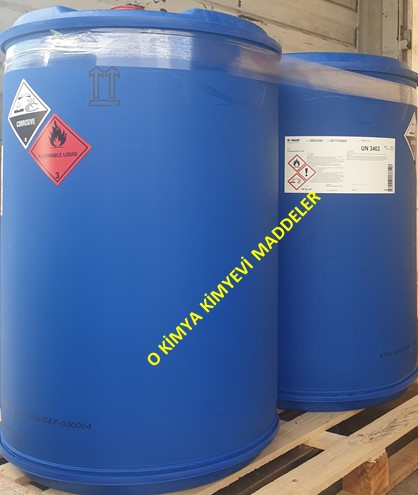
PROPIONIC ACID PACKAGING
Product Documents | |
What is Propionic Acid?
Molecular Formula (Propionic Acid): C3H6O2
Molecular Weight: 74.08 g/mol
Chemical Name: Propionic Acid
CAS Number: 79-09-4
It is a carboxylic acid containing an ethane molecule attached to a carboxy group, with a slightly pungent odor. It is an oily liquid.
Propionic acid is among the short-chain fatty acids.
E Code: E 280
Other Names are as Follows;
Propanoic Acid
Ethylformic acid
Methylacetic acid
79-09-4
Sentry Grain Preservative
Propanoate
Propenyl acid
Propionic Acid
Propionic Acid
How is Propionic Acid Produced?
Wood is turned into pulp and fermentation is carried out with the help of bacteria. This method is for the production of propanoic acid.
Another method in its production uses ethylene as a starting chemical. In this process, it is also obtained by the reaction of carbon monoxide and steam.
What are the Physical and Chemical Properties?
It is a colorless oily liquid with a slightly pungent odor.
Boiling point is 141 °C.
Melting point is -21 °C.
The solubility of propanoic acid in water is 1000 mg/L at 25 °C. According to these values, its solubility in water is very good.
Its density is 0.99 g/cm3.
What are the Application Areas?
As an antifungal agent, when modified with EDTA , it has very good inhibition against bacteria and molds. Bacteria and mold inhibitors made with propanoic acid are not affected by pH changes. Thus, it is suitable for use as an antifungal agent.
In the livestock sector, poultry get sick due to bacteria present in their environment. These bacteria penetrate the drinking water of animals and are taken involuntarily via the oral route. To protect animals from bacteria, propanoic acid is added to the drinking water of poultry and farm animals to provide an antibacterial effect. In this way, farm animals and poultry are prevented from getting sick from the water they drink.
Its biomarker properties are utilized in the detection of metabolic diseases such as Diabetes and Obesity.
Use in Grains and Animal Feeds
Fungi, bacteria, and yeasts found in grains cause the grains to spoil. Especially wheat stored during the winter period becomes damp over time. This causes them to spoil in a short time. This acid is used to prevent the spoilage of grains and wheat. With the effect here, the growth of fungi, bacteria, and yeasts in grain or wheat is prevented, thereby preventing the proliferation of microbes. In grain and wheat, if the moisture level increases, the grains and wheat are protected thanks to propionic acid.
Barley stored for animal feed becomes subject to molding with 25% moisture content after 4 weeks. Propionic acid is used to prevent the molding of barley used as animal feed. Propionic acid is used to prevent the molding of barley used as animal feed. In this way, barley can be stored safely.
During the storage of harvested grains, mycotoxins caused by fungi occur after a certain period. Mycotoxin formation is prevented by using propionic acid in grains after harvest.
During the storage of grains, attacks from some insects occur. The most common insects in grain stores are grain weevils. Grain weevils cause grain spoilage. During storage of grains, grain weevil eggs are killed by using a certain concentration of propionic acid. If the concentration is increased slightly, grain weevils are almost completely killed.
Bacteria in feeds used in the livestock sector produce mycotoxins, reducing the energy value of the food. For example, by increasing the quality of the feeds used on cattle farms, an increase in the weight of the fed animals can be seen. Propionic acid is used to inhibit bacteria that reduce the energy of animal feeds in cattle farms.
To prevent corrosion on carbon steel, propionic acid is modified with another chemical and used as a corrosion inhibitor. In this way, corrosion on carbon steel will be prevented in the range of 75%-95%.
What are the Factors Affecting Prices?
It varies according to the prices of chemicals. For example, as ethylene prices increase, propanoic acid prices will increase.
Agricultural acid prices have entered an upward trend with the expansion of its use in the agricultural sector. Therefore, it is a determining factor on the usage prices in this field.
As a result, as the production and stocks of the companies selling this chemical increase, the prices tend to move downward.
Propionic Acid Sales
Chemical substances are packaged in packages determined by international standards. These are sold starting from the smallest package to the largest package or in bulk with tanker. These can be 1 gram packaging, 1 ton big bag packaging, the smallest drum packaging, or packaging-free sales with tanker.
All information here should be used in accordance with the legislation by expert people and professionals in the field.