

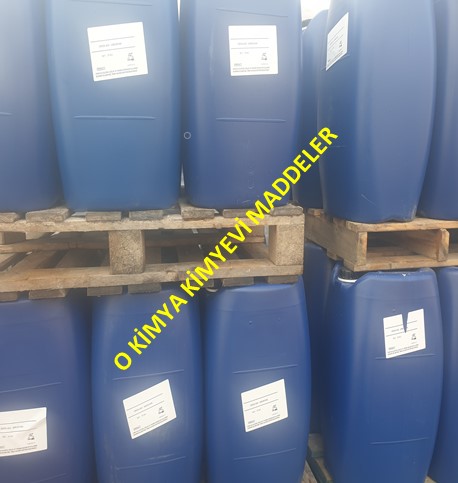
AMMONIA PACKAGING
Product Documents | |
What is Ammonia?
Molecular Formula (Ammonia): NH3
Molecular Weight: 17.031 g/mol
Chemical Name: Ammonia
CAS Number: 7664-41-7
It has a very sharp odor. It is a colorless liquid or gas. The smell of ammonia is a familiar scent in our daily lives because it is released from household cleaning products and ammonia salts.
It has very easy solubility in water. Ammonia is one of the most abundant nitrogen compounds in the atmosphere.
It is one of the top 10 most produced compounds worldwide. It is a compound categorized as a base.
Salts of this chemical are used with the idea of keeping people conscious. Conversely, it has not been proven to activate muscles.
Regarding its salts, the working principle is that when smelled by anyone, it accelerates breathing by ensuring oxygen reaches the brain faster.
The concentration available on the market is generally 25%. The anhydrous form is in the gas phase and is transported in pressurized cylinders.
In cases of fainting, smelling ammonia salts helps the consciousness return quickly.
Ammonia is primarily produced as a gas. To minimize transportation costs, it is converted to liquid form at a pressure of 7.5 bar at 20°C. In this way, liquefied pure ammonia is transported. It is then usually offered to the market as 25% Ammonia.
Other Names Are as Follows;
Gas Form
Liquid Form
Solution Form
Anhydrous Ammonia
7664-41-7
Aqueous Ammonia
How is Ammonia Produced?
Production is carried out commercially by combining Nitrogen and Hydrogen under high pressure and temperature with the help of a catalyst. The resulting chemical is in gas form. In the subsequent process, it is passed through water to obtain the solution form.
Nitrogen used in the production process is obtained by separating it from the air. Hydrogen is obtained by steam reforming of natural gas.
The production reactions are as follows.
N2(g) + 3H2(g) 》2NH3 (g)
What are the Physical and Chemical Properties?
Physically, it has a colorless appearance with a strong, sharp odor.
The boiling point is -33 °C.
The melting point is -78 °C.
It dissolves in chloroform and ether.
The solubility of ammonia in water decreases as the temperature increases.
Its density is 0.695 g/L.
It is not a flammable chemical substance. However, severe combustion can occur above the vapor concentration.
In response to the question of whether ammonia is an acid or a base; it is a Base.
What are the Usage Areas of Ammonia?
Ammonia is used in the manufacture of fertilizers, ammonium sulfate, and ammonium nitrate, and in the manufacture of nitric acid.
It is reacted with carbon dioxide. As a result, urea, one of the nitrogen source compounds used in the agricultural sector, is obtained.
It can be used together with Oxalic Acid, Hydrogen Peroxide, and Sodium Carbonate for bleaching wood.
In pharmaceutical applications, its dilute solution is used as a buffering chemical and pH balancer.
It is used as a pH balancing agent in the manufacture of water-based adhesives produced for bonding materials such as rubber. Additionally, Potassium Hydroxide (Potash Caustic) can also be used.
In the medical field, its salts are used as stimulants against insect bites or stings in therapeutic applications. These salts are obtained from the solution of ammonia.
It has a good corrosion inhibitor effect for protecting storage tanks, heat exchangers, and condensers against corrosion.
It is used in the manufacture of Sodium Carbonate.
It is among the substances used in the production of flame retardant chemical products in the manufacture of wood products.
It is used in the rubber industry for the clarification and preservation of both field latex and concentrated latex. Due to its high pH effect, it prevents the formation of bacteria. Besides, it hydrolyzes fatty acid esters and ensures the formation of soaps that function as stabilizing agents. At the same time, it ensures the increase of the storage period of the latex.
It is used as a closed-circuit cooling chemical in many industrial facilities.
In the manufacture of industrial glass cleaning chemicals, in chemicals produced for cleaning some hard surfaces, and in some formulations for cleaning old polyurethane residues on aluminum surfaces, it is used together with methylene chloride.
It is used as a binder in materials produced in the construction sector.
It is used as an amine source for the production of basic Copper Carbonate, basic Copper Sulfate, basic Copper Nitrate, and basic Copper Acetate from scrap copper.
It is used together with Glycerin in the manufacture of depilatory components.
Ammonia is used as a volatile alkali to make the water phase slightly alkaline during the dry cleaning processes of white clothes.
In solder manufacture, it is utilized by using Urea, benefiting from the Ammonia it contains.
Recently, it has been used as a greener Marine Transport fuel because it does not contain carbon compared to Methyl Alcohol and LNG.
Ammonia is also used as a transport form of Hydrogen and is converted back into hydrogen.
High purity ammonia is used as a Nitride source in semiconductor production. In this application, it ensures the formation of Metal Nitride and Silicon Nitride layers.
It is among the general chemicals used in the production of Mono Ammonium Phosphate (MAP).
It is used together with hydrogen peroxide in the production of pharma-grade PVP K90 for the purpose of removing toxic substances. Medical-grade Polyvinylpyrrolidone is produced by this method.
It is a compound used for stripping paints from metal structures.
What are the Factors Affecting Prices?
The biggest factor in its price is directly dependent on the prices of the gases used in its production. As the prices of Nitrogen and Hydrogen gases increase, the price of this chemical increases.
With the development of industrial industry, the use of ammonia is increasing. Therefore, its price will increase.
As air temperatures increase, ambient conditions that need to be cooled will arise, so the prices of this chemical will increase.
Ammonia Sales
Chemical substances are packaged in packages determined by international standards. These are sold starting from the smallest package to the largest package or in bulk with tanker. These can be 1 gram packaging, 1 ton big bag packaging, the smallest drum packaging, or packaging-free sales with tanker.
All information here should be used in accordance with the legislation by expert people and professionals in the field.