

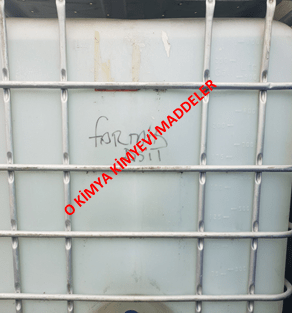
 FORMIC ACID PACKAGING 1200 KG IBC
Product Documents |
|
| FORMIC ACID ANALYSIS CERTIFICATE | |
What is Formic Acid?
Molecular Formula (Formic Acid): HCOOH
Molecular Weight: 46.025 g/mol
Chemical Name: Formic Acid
CAS Number: 64-18-6
It is the simplest of the carboxylic acids. Its most commonly used other name is Methanoic Acid.
It was originally obtained by isolating the bodies of ants through distillation. For this reason, it was named Formic Acid from the Latin word formica, which means ant.
It is both found naturally and produced naturally by ants and some insects for self-defense purposes. Additionally, it is involved in the metabolism of single-carbon compounds.
Other Names are as Follows;
- Methanoic Acid
- Aminate
- Formylate
- Methanoate
- Hydrogen Carboxylate
- Oxomethanol
- Metacarbonoic Acid
- Anhydrous Form
- Aminic Acid
- Formisic Acid
- Formira
How is it Produced?
There are several methods for the production of Formic Acid. These are as follows. First, since 1896, it has been produced from Carbon Monoxide (CO) and Sodium Hydroxide (NaOH) in European countries. In this production process, Sodium Formate (HCOONa) is first produced, and then it is produced by binding hydrogen from Sulfuric Acid (H2SO4) and releasing Sodium. The equation for this reaction is as follows.
CO + NaOH 》HCOONa (at 120-125 °C temperature and 6×10`5 – 8×10`5 Pa pressure)
HCOONa + H2SO4 》HCOOH + NaHSO4
In 1980, the American Science and Design company developed the carbonylation of Methanol. In this production process, a mixture of Liquid Ammonia and Methanol is used at 70 °C under 32.5 mPa pressure to absorb carbon monoxide. It is subsequently hydrolyzed in an aqueous solution.
An aqueous solution is obtained in its production. A dehydration process must be carried out here. For this process, anhydrous magnesium sulfate or anhydrous copper sulfate can be used. Subsequently, extractive distillation is performed. Trimethylamine can be used as an extracting agent in the production process. Then, the anhydrous form is obtained through dehydration and purification.
At the same time, many stinging nettles contain this chemical.
What are the Physical and Chemical Properties?
It is a colorless acid that emits odorless fumes. It has a pungent odor.
The boiling point is slightly higher than water at 101 °C. The melting point is 8 °C.
Its density is 1.22 g/cm3 at 20 °C.
Solubility is 100,000 mg/L (at 25 °C).
In terms of solubility, Formic Acid is miscible with Ether, Acetone, Ethyl Acetate, Methanol, and Ethanol. Besides, it is partially soluble in Benzene, Toluene, and Xylene.
It dissolves up to 10% in Benzene, Toluene, and Xylene. It also has a lower solubility in Aliphatic Hydrocarbons.
Formic Acid decomposes when heated and when reacting with strong acids.
What are the Usage Areas of Formic Acid?
- As an area of use, it is used in the manufacture of adhesives and sealants in industry.
- It is used in the manufacture of processing aid chemicals suitable for oil production.
- It is used in the manufacture of clothing and footwear care products. It is used in the manufacture of some electrical and electronic products.
- It is used in the manufacture of laundry and dishwashing products.
- It exhibits its antimicrobial effect by binding Ca+2, Mg+2, and Fe+2 ions to complex molecules.
- It is used in the manufacture of animal feed to provide preservative and antibacterial properties.
- When sprayed on fresh hay and other silage products, it stops certain decay effects. Besides, it helps animal feeds maintain their nutritional value for a longer period.
- Fermentations occurring in the silo are generally divided into 5 groups. These are classified as lactate, acetate, butyrate, wilting, and chemical. Fermentations caused by lactic acid bacteria can be eliminated with formic acid, acetic acid, and propionic acid. The usage amounts here are low.
- In some cases, formic acid is used as a preservative in human food. Sometimes it is not used as a preservative but to create artificial flavors in foods and artificial scents in perfumes.
- It is used in leather tanning, processing of textile and paper, and converting latex from the rubber tree into rubber.
- It is included in chemical formulas used for cleaning silicone rubber sealants.
- For many years, green fodders have been treated using formic acid together with nitrates to ensure their preservation in fodder silos. Ammonium Chloride, which has an osmotic effect, can be added to increase the preservation on green feeds. It can be performed on the surface of the application area or by spraying.
- It acts as a catalyst as an organic solvent in the production of corrosion-resistant Aluminum (Metal) pigments. In this application, Acetic Acid, Maleic Acid (Maleic Anhydride), or Acetic Anhydride can be used instead of Formic Acid.
- In oil and gas wells, carbonate-structured formations prevent the passage of valuable substances. These carbonate-structured formations can be broken with acidic buffer solutions. Afterwards, a path can be opened for the extraction of the valuable substance. Formic Acid is used in these applications.
What are the Factors Affecting Prices?
The price of Formic Acid has been increasing for a long time. We can evaluate this due to: increase in usage areas and the increase in coal prices. Because it is necessary to burn coal to create carbon monoxide.
The price of Formic Acid is directly dependent on the price of Methanol. As the price of Methanol increases, its prices will increase. As the usage areas of Methanol increase, the price of this chemical will increase.
Prices are directly dependent on the stocks of companies that sell formic acid. As their stocks increase, the price will increase.
The price of Formic Acid will increase as the distance of the companies producing this chemical from the users increases. Because shipping costs will increase due to distance. This will directly affect its price.