

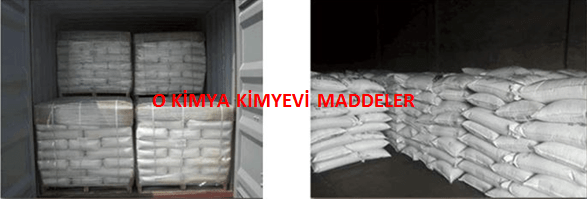
 ACTIVATED CARBON PACKAGING
Product Documents |
|
| ACTIVATED CARBON CERTIFICATE OF ANALYSIS | |
 Use of Activated Carbon for Odor Removal in Biogas Plants Use of Activated Carbon for Odor Removal in Biogas Plants |
|
What is Activated Carbon?
Molecular Formula (Activated Carbon) : C
Molecular Weight: 12,011
CAS Number: 7440-44-0
Chemical Name: Activated Carbon
Activated carbon is a porous material that removes organic substances from liquids and gases through a process known as adsorption.
It is used to describe organic material that has generally been heated to temperatures above 315 °C, or first treated with a strong acid and then heated to temperatures above 232 °C.
The reason for preferring Activated Carbon is that the activation process increases the surface area of each particle, making activated carbon a reliable adsorbent. This creates microscopic pores.
There are 3 types of Activated Carbon.
- Coal-based Activated Charcoal
- Wood-based Activated Charcoal
- Coconut shell-based Activated Charcoal
Among these, the most commonly used is coal-based. The wood-based type has a certain usage rate in the industry. However, coconut shell-based activated carbon is gradually gaining application areas in the industry.
Other Names Are As Follows;
- Carbon
- Graphite
- Powder Form
- Granular Form
- Mineral Carbon
- 7440-44-0
- Activated Charcoal
- Charcoal, Activated
- Activated Wood Charcoal
- Adsorba
- Adsorbit
How is it Produced?
The production of this chemical substance can be done from a wide variety of organic materials rather than just coal.
Activated Carbon exists in 3 forms. These include Powder (PAC), Granular (GAC), and Pellet forms.
The powder form has an average particle size of only 20 microns. Therefore, it has an extremely fine particle size. For this reason, powdered activated carbon can become airborne with the slightest air current. Airborne activated carbon has the property of being able to cover everything.
The production process is divided into 2 groups: the partial combustion process and the pure pyrolysis process.
What are the Physical and Chemical Properties of Activated Carbon?
It is a black chemical used to increase its absorption capacity. It can cause an explosion if not cooled properly after production.
If heated, it warms up slowly and has the property of being able to ignite in the air.
It is in black powder, granular, and pellet form. It is odorless.
It can also have a steel-gray color. It feels oily. It is an odorless solid.
Melting point is above 3500 °C.
Boiling point is above 4000 °C.
In terms of solubility, it is insoluble in water and organic solvents.
Its density is between 2.00 – 2.25.
Use of Activated Carbon for the Purification of Some Organic Acids and Amino Acids
Specially treated activated charcoals are designed for use in acidic chemical processes. These substances are washed with acidic chemicals to remove ash that can dissolve in acid.
The most common types of acids that can be used in these applications are; Hydrochloric Acid, Sulfuric Acid, and Phosphoric Acid.
The Organic Acids are listed as follows.
- Benzoic Acid
- Lactic Acid
- Propionic Acid
- Malic Acid
- Acetic Acid
- Oxalic Acid
- Succinic Acid
What are the Usage Areas of Activated Carbon?
- During the activation process, a vast number of pores in the carbon are opened, thereby removing unwanted molecules. The open pores on this chemical allow the carbon to capture pollutants in a process known as adsorption. The adsorption rate for a 1-pound surface area of Activated Carbon ranges from 60-150 acres.
- It is used in purification processes by utilizing its adsorbent and absorbent properties.
- In toothpaste production, it is used together with some extracts, benzyl alcohol, potassium sorbate, and sodium benzoate.
- It is used in the manufacturing of ion-exchange substances.
- It can be used in the manufacturing of smelter raw materials.
- It is one of the main components in steel production.
- In MDF manufacturing, activated charcoal is used as a filler to increase mechanical properties and resistance to impact effects.
- Activated charcoal made from coconut shells is used on hamburger buns.
- It is used in the manufacturing of large-scale graphite electrodes.
- It is used to decolorize the substance obtained in the purification stage of chemical raw material production. In this field, it is added to the solution in an amount of 1-2% of the raw material's weight, and large particles adhere to it. This allows them to be separated from the solution when passed through a filter.
- It is used in the production of consumer batteries.
- It can be used in the production of copper-based products in continuous foundry operations. It acts as a foundry sand additive. It can be in the range of 0.1% to 10% of the total dry weight of the foundry sand.
- It acts as a process regulator in some reactions and processes.
- It is used in the manufacturing of lubricants and lubricant additives.
- It is used in the manufacturing of construction/building materials.
- Activated carbon is used as a water purification product.
- It is used in the manufacturing of some metal products.
- In the production of Salicylic acid, after sodium salicylate is diluted with water, it is passed through activated carbon to remove color.
- To prevent Clostridium Botulinum Toxicity, an anaerobic bacteria type that forms on lake and coastal edges, a treatment is applied by mixing activated carbon with kaolin, tannic acid, magnesium oxide, and water.
- In agriculture, it is used with fertilizer to protect seeds from harmful herbicides and fungicides.
Removal of Heavy Metals from Water;
Heavy metal waste poses a very large threat to the environment. The heavy metals in water are as follows. The following methods are applied to remove these heavy metals.
- Lead removal from water
- Cadmium removal from water
- Nickel removal from water
- Chromium removal from water
- Zinc removal from water
As the concentration of heavy metals in water increases, it becomes more difficult to remove them.
The following methods are applied to remove metal pollutants from water.
- Adsorption
- Membrane filtration process
- Precipitation process
- Ion exchange
Different technologies like these are applied. Among these methods, the adsorption method has been identified as the most economical way to remove heavy metals from water.
Additional Considerations for the Removal of Organic Substances Using Activated Carbon are as Follows;
Physical Properties
In Activated Carbon, pore size and distribution have the greatest impact on filtration. The filtration process occurs when the carbon pores are large enough to allow the adsorption of contaminants.
Chemical Properties
The surface of the filter can chemically interact with organic molecules. Electrical forces between the surface of this chemical and the chemical structure of some pollutants can result in ion exchange or adsorption.
Contaminant Properties
It is best for filtering large organic molecules. Organic molecules are similar materials. Therefore, they tend to associate with each other. For this reason, the tendency for organic chemicals to be associated with Activated Charcoal filtration is stronger than remaining dissolved in water.
Concentration
In its use, the adsorption process can be affected by the concentration of organic pollutants. It is necessary to obtain detailed information to determine how an Activated Charcoal filter will perform at different concentration levels for a specific chemical.
Water Temperature and pH
The adsorption rate will generally be more effective at lower temperatures and when the pH level is low. In its use, chemical reactions and chemical forms are closely related to water temperature and pH. In most cases, organic chemicals can be adsorbed more as temperature and pH levels decrease.
Exposure Time
The duration of contact between the contaminant and the activated charcoal filter also affects the adsorption process. The longer the contact time with the filter, the greater the amount of contaminant that will be removed.
What are the Factors Affecting its Price?
The price of Activated Carbon has been continuously increasing for many years since it began to be used. The price will increase depending on the expansion of its usage areas.
The price of Activated Carbon is directly dependent on the prices of the raw materials used in its production. As the prices of the raw materials used in the production of this chemical increase, the price of this raw material will also increase.
Activated Charcoal prices vary depending on the number of companies that produce it. As the number of manufacturing companies increases, the price of this chemical will decrease for a short period.
The prices will also vary depending on the stocks of the companies that sell Activated Carbon.