

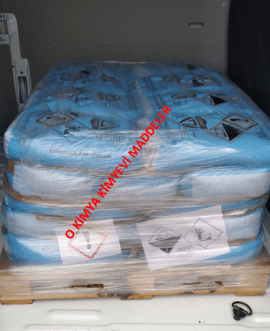
 ZINC CHLORIDE PACKAGING
Product Documents |
|
| ZINC CHLORIDE ANALYSIS CERTIFICATE | |
What is Zinc Chloride?
Molecular Formula (Zinc Chloride): ZnCl2
Molecular Weight: 136.3 g/mol
Chemical Name: Zinc Chloride
CAS Number: 7546-85-7
It has a colorless to white appearance. Due to its hygroscopic nature, it has a high level of moisture absorption capacity. It has the ability to attract moisture from the atmosphere.
Zinc is an element required in trace amounts for human metabolism.
Other Names are as Follows;
- Zinc Chloride
- Zinc
- Zinc Dichloride
- 7646-85-7
- Anhydrous Form Zinc (II) Chloride
- Hydrated Form
How is Zinc Chloride Produced?
Zinc chloride production is based on several methods. It is necessary to determine whether the anhydrous product or the hydrated form is to be obtained.
For the anhydrous form, it is obtained through the reaction of zinc metal (Zn) with hydrochloric acid. This results in the formation of anhydrous zinc. This production reaction is as follows.
Zn + 2HCl 》ZnCl2 + H2
Aqueous forms are produced using zinc particles and high-concentration hydrochloric acid. No hydrogen gas release occurs in the reaction produced using ZnS and ZnO. The production reaction for hydrated zinc chloride is as follows.
ZnS + 2HCl 》ZnCl2 + H2S
Commercially used zinc (II) chloride forms worldwide contain zinc oxychloride.
What are the Physical and Chemical Properties?
Physically, it is a solid in white crystalline granular form. It can become wet very quickly in the presence of moisture.
The solubility of Zinc (II) chloride in water is very high. Solubility increases as the temperature increases. It is as follows, respectively.
In 100 ml of water;
342 g at 0 °C
343 g at 10 °C
395 g at 20 °C
452 g at 30 °C
488 g at 40 °C
614 g at 100 °C
It possesses this solubility. As can be seen, solubility increases as the temperature increases.
It is soluble in Methyl Alcohol, Ethyl Alcohol, Glycerin, and acetone. However, it does not dissolve in liquid ammonia.
Its density is 2.907 g/cm3.
Its boiling point is approximately 732 °C.
Its melting point is around 290 °C.
In terms of stability, it is incompatible with strong oxidizing agents. These include compounds such as cyanides, sodium metabisulfite, and potassium permanganate. Hydrogen peroxide also falls within this scope.
What are the Areas of Use for Zinc Chloride?
- In the field of pharmacology, it is used in the manufacture of mouthwash products designed to eliminate bad odors caused by bacteria in the human mouth. It is also an active ingredient in the manufacture of mints, lozenges, and chewing gum.
- It is an important component in the production of anti-inflammatory painkillers in the pharmacology sector.
- In the production of cation exchange resins, it can be used as a dehydration and condensation agent in catalysts in the organic synthesis industry.
- It is used as a mordant, mercerizing agent, and sizing agent in dyes used in the textile sector.
- It is used in the production of anti-algae and anti-fungal chemicals outside residential areas.
- It is used in the production of certain deodorants and disinfectants in the cosmetics sector.
- It is used as a soldering flux.
- It acts as a corrosion inhibitor in the water conditioning sector.
- It is used as a cross-linking agent in the production of resins used in the textile sector.
- Zinc chloride is used in the precipitation bath for rayon production. It is an important chemical compound for dissolving starch, silk, and cellulose.
- It is used as a flame retardant in cardboard manufacturing and textile products.
- In the manufacture of colophony resin (Rosin), it is used as a polymerization agent in these applications due to the very easy separation ability of metal halides. In other applications, sulfuric acid is used as a polymerization catalyst.
- In the production of dishwashing cleaning compositions, it contributes to cleaning protein stains on dishes by being used together with the alkali metal sodium hydroxide in magnesium-containing cleaning products.
- It is one of the forms of Zinc used to increase the nutritional value of animal feeds and improve animal health.
What are the Factors Affecting Prices?
The price of zinc chloride depends directly on the prices of the chemicals used in its production. Prices will increase as the prices of hydrochloric acid and zinc ore used in its production increase.
The prices of this raw material are directly proportional to the area of use of this chemical. As the areas of use increase, the prices will increase.
If companies selling zinc chloride increase their stocks, prices will experience a short-term decrease.
The distributor of this chemical generally keeps prices under control.