

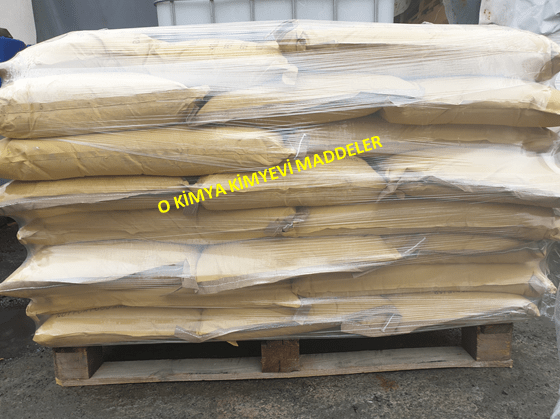
 SODIUM PERCARBONATE PACKAGING 25 kg
Product Documents |
|
| SODIUM PERCARBONATE CERTIFICATE OF ANALYSIS | |
What is Sodium Percarbonate?
Molecular Formula (Sodium Percarbonate): Na2CO3.3/2H2O
Molecular Weight: 314.017 g/mol
Chemical Name: Sodium Percarbonate
CAS Number: 15630-89-4
Percarbonate is a crystalline solid that is denser than water. Its other important name is peroxyhydrate. It was developed as an alternative to perborate bleaches in household detergents. When dissolved in water, it produces soda ash (Sodium Carbonate) and Hydrogen Peroxide.
It is a typical alkaline chemical. The dry form contains 30% hydrogen peroxide by weight. It is also known as Solid Peroxide.
Other names are as follows;
- Percarbonate
- Oxyper
- Solid Peroxide
- Peroxy Sodium Carbonate
- Carbonic Acid Disodium Salt
- Hydrogen Peroxide
- Powdered Hydrogen Peroxide
- Carbonoperoxoic Acid, monosodium salt
How is it Produced?
Sodium Percarbonate is not naturally produced from a plant or substance. That is, it is not a chemical found on its own. It is produced synthetically using sodium carbonate and hydrogen peroxide.
The method for obtaining this chemical is through crystallization from an aqueous solution. In this process, Sodium Carbonate is reacted with Hydrogen Peroxide in the temperature range of 10-20 °C. As a result, it crystallizes in the presence of stabilizers such as Sodium Chloride. During the production process, crystallizers such as polyphosphates or polyacrylates are used during the crystallization phase.
What are the Physical and Chemical Properties of Sodium Percarbonate?
It is a chemical found in crystal powder or granular form. It exists in solid form.
It has flammable properties when it comes into contact with organic substances.
Percarbonate Density is 2.1 g/cm³.
In terms of solubility, it has good solubility in water. Approximately 14 g of Sodium Percarbonate dissolves in 100 mL of water.
Melting point; it decomposes above 50 °C.
Boiling Point: Decomposes, has no boiling point.
In terms of reactivity, it is an oxidizing agent.
Effect of Its Use in Small Ruminant Feeds on Methane Gas Emissions?
In small ruminant feed production, it has been determined that adding it to the hydrogen peroxide concentration reduces methane gas (CH4) emissions.
It has been determined that the use of percarbonate in this application radically inhibits methane gas without negatively affecting carbon dioxide (CO2) and essential oil production.
Adding 5 g to the mixture reduces methane (CH4) production by 22.5% (P < 0.01).
However, this amount of sodium percarbonate has a negative effect on rumen bacteria. Therefore, the optimum usage range should not be exceeded when using this chemical.
Feed and rumen digestibility are suitable when used at an optimum level in the ruminant diet.
What are the Usage Areas of Sodium Percarbonate?
- In the manufacture of toothpastes, it is modified with surfactants (SLES) to prevent chromophore and tartar formation on the surface of the teeth.
- It is used as a bleaching agent in automatic dishwashers.
- In the industrial field, percarbonate is used for cleaning and bleaching tripe. It is used for bleaching purposes in textiles.
- In some countries, it is used in toothpastes for better disinfection and whitening.
- Among its usage areas, it is applied as a treatment method in lakes and drinking water reservoirs to provide control of blue-green algae.
- In industry as bleaching agents. It is used as oxidizing and reducing agents.
- It is used in the manufacture of coating chemicals and surface treatment agents.
- It is used in the manufacture of some water treatment products.
- Percarbonate is used as a bleaching agent in the textile and paper industries.
- It is used as an inorganic peroxide source in the production of acrylamide-containing paper strength agents.
- During the production of metal kitchenware, oil residues remain on the produced materials. These oil residues were normally cleaned with acidic materials. These acidic materials, Nitric Acid or Hydrochloric Acid, damage the machines during washing. Sodium Percarbonate is used in industrial washing systems to prevent such problems.
- Percarbonate is used in the manufacturing and formulation processes of stain remover chemical products.
- The whiteness level during the bleaching of colored fabrics in the textile sector is very important. Sodium percarbonate is used for bleaching colored fabrics made of cotton fibers. The usage rates here have very different effects on bleaching. Factors affecting the stabilization of hydrogen peroxide in percarbonate are divided into 3:
- Type and amount of stabilizer.
- Amount of water.
- Amount of percarbonate.
What are the Factors Affecting Prices?
The price of Sodium Percarbonate is directly proportional to the prices of the chemicals used in its production. As the price of Sodium Carbonate increases, the price of this chemical will increase. As the price of hydrogen peroxide increases, percarbonate prices will increase.
Prices are directly dependent on the usage area. As the usage areas of percarbonate increase, its price will increase.
Sodium Percarbonate prices change depending on the number of companies importing this chemical. As the number of importing companies increases, prices will decrease.
It changes depending on the stocks of the companies producing this chemical. As production companies increase their stocks, the price of percarbonate will decrease.