

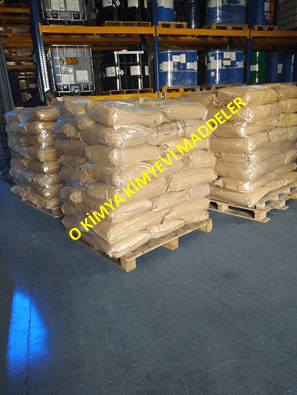
 SODIUM SALICYLATE PACKAGING
Product Documents |
|
| SODIUM SALICYLATE ANALYSIS CERTIFICATE | |
What is Sodium Salicylate?
Molecular Formula (Sodium Salicylate): C7H5NaO3
Molecular Weight: 160.1 g/mol
Chemical Name: Sodium 2-hydroxybenzoate
CAS Number: 54-21-7
Like many compounds, this chemical substance is a salt. It is the salt formed by Salicylic Acid with the element sodium. It is a compound in the class of non-steroidal anti-inflammatory drugs (NSAIDs).
It is found in almost most skin. Cyclooxygenases are found in the human body. These are divided into 1 and 2. Pain occurs as a result of inflammation occurring in these. Sodium Salicylate acetylates these cyclooxygenases. Consequently, it prevents the formation of pain by inhibiting the synthesis of prostaglandins that cause pain by preventing inflammation.
There are different types: USP Grade, EP Grade, BP Grade, and Technical Grade.
Other Names Are As Follows;
- Salicylic Acid Monosodium Salt
- 2-Hydroxybenzoic Acid Sodium Salt
- Monosodium Salicylate
- Sodium 2-hydroxybenzoate
- o-Hydroxybenzoic Acid Monosodium Salt
- Benzoic Acid 2-Hydroxy Sodium Salt
- Salicylate
- USP Grade
How is Sodium Salicylate Produced?
Sodium Salicylate production is achieved by reacting sodium bicarbonate with salicylic acid after its production.
In the first stage of this reaction, Phenol (C6H6O) is reacted with Sodium Hydroxide (NaOH).
This reaction is as follows:
C6H6O + NaOH 》C6H5NaO (Sodium Phenoxide) + H2O (Water)
In the 2nd stage of the reaction, Sodium Phenoxide is reacted with Carbon Dioxide.
C6H5NaO + CO2 》C7H5O2Na
The product obtained at this stage also contains some impurities. These impurities are 4-Hydroxybenzoic Acid, 4-Hydroxyisophthalic Acid, Phenol, and other impurities.
Refined sodium salicylate is obtained in the carboxylation reaction. The obtained product is acidified with Hydrochloric Acid to carry out the Salicylic Acid precipitation process.
C7H5O2Na + HCl 》C7H6O2 (Salicylic Acid)
Then, the obtained salicylic acid is reacted with Sodium Bicarbonate to obtain pure Sodium Salicylate. The reaction for this process is as follows:
C7H6O2 + NaHCO3 》C7H5O2Na + H2O + CO2
A high-purity chemical compound is obtained with the production carried out in this way.
What are the Physical and Chemical Properties?
Physically, it has a white crystalline powder or yellowish color.
The density of this chemical compound is 0.32 g/cm³ at 20 °C.
Sodium Salicylate solubility is 1000 g/L at 20 °C.
The pH of a 100 g/L solution is at the level of 6.50.
It is a stable chemical. It may decompose upon exposure to light. It can convert into Salicylic Acid in the presence of mineral acids.
The melting point is above 300 °C.
Boiling Point: Information not available.
It can be stored at temperatures between 15 °C and 30 °C.
What are the Usage Areas of Sodium Salicylate?
- Among its most common uses is the production of salicylates. In this field, the production of salicylates such as methyl salicylate, ethyl salicylate, and phenyl salicylate is carried out.
- It is used as a coupling agent in the production of azo dyes.
- It is used as a preservative in some applications in the food industry. In these applications, it is used instead of salicylic acid because it has more applicable properties. The solubility of salicylic acid is lower than sodium salicylate, almost negligible. Therefore, the importance of the solubility factor emerges.
- In the medical field, it takes part in the manufacture of analgesic and antipyretic pharmaceutical preparations.
- It is used in the production of non-steroidal anti-inflammatory drugs and induces cell deaths such as necrosis and apoptosis for cancerous cells.
- It is used in the manufacture of drugs used in the treatment of patients with sensitivity to aspirin.
- Enteric-coated tablets are used to treat patients suffering from stomach disorders. It is used together with sodium bicarbonate in the production of enteric-coated tablets to alleviate stomach discomfort.
- It is used as a preservative in many cleaning products.
- It is used as a preservative in personal care products and cosmetics.
- It is used as a preservative in the manufacture of antibacterial hand soaps.
- In antifreeze production, it has the property of preventing the conversion of glycol to Glycolic Acid and Formic Acid by maintaining the thermal stabilization of Mono Ethylene Glycol or Mono Propylene Glycol. For this reason, it is used as an additive in antifreeze production.
What are the Factors Affecting Its Prices?
The price of Sodium Salicylate is directly dependent on the prices of the chemicals used in the production of this chemical. As the prices of Phenol, sodium Hydroxide, and Carbon Dioxide increase, the prices of these chemicals rise.
Companies that are distributors of Sodium Salicylate have a decisive influence on the prices of this chemical substance. Especially with the depletion of stocks, prices gradually begin to rise. When there is a new stock increase, prices will experience a short-term decrease.
If companies selling Sodium Salicylate increase their stocks, prices will experience a short-term decrease. As the usage areas of this chemical substance increase, prices also increase.