

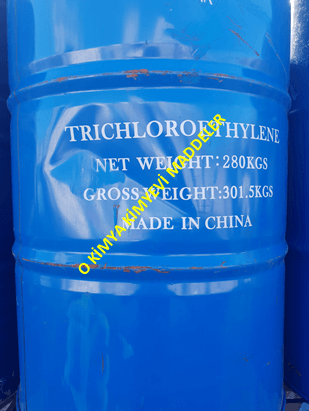
 TRICHLOROETHYLENE PACKAGING 280 kg
Product Documents |
|
| TRICHLOROETHYLENE ANALYSIS CERTIFICATE | |
What is Trichloroethylene?
Molecular Formula (Trichloroethylene): C2HCl3
Molecular Weight: 131.38 g/mol
Chemical Name: Trichloroethylene
CAS Number: 79-01-6
Trichloroethylene is an excellent industrial solvent chemical. It is a synthetic, light-sensitive, volatile, colorless liquid chemical that is miscible with many non-polar solvents.
Due to its moderate boiling point, it possesses high vapor pressure and high stability, along with air stripping properties.
Other Names Are As Follows;
- Trichloroethene
- Acetylene Trichloride
- Triethylene
- Trichloran
- Ethinyl trichloride
- Ethylene Trichloride
- Ethene, trichloro
- 1,1,2-Trichloro
- 1,1,2-Trichloroethane
- 1,1-Dichloro-2-chloroethylene
How is it Produced?
Currently, trichloroethylene production methods include direct chlorination of acetylene, direct chlorination of ethylene, and the ethylene-oxy chlorination method.
The production of this chemical is also carried out from tetrachloroethylene, which is subjected to dehydrochlorination with the help of the vapor phase.
It is reacted with Calcium Chloride and lime using anhydrous ferric chloride as a catalyst under low pressure. The raw material obtained during the production process is boiled using a high-boiling effect. Thereafter, a distillation process is performed. At the very end of the production process, ethylene trichloride is obtained at the desired purity by passing through high-boiling and low-boiling distillation columns.
What Are the Physical and Chemical Properties?
Its odor is almost identical to chloroform. It is a colorless, oily liquid chemical.
The density of trichloroethylene is 1.4642 g/cm3. It is a chemical denser than water. It is non-flammable under normal conditions.
In terms of stability, it is a stable liquid. It has a sweet odor.
The boiling point is 87 °C.
The melting point is -86 °C.
The solubility of trichloroethylene in water is 1.28 mg/L at 25 °C.
It decomposes slowly in the presence of light in a humid environment.
In people exposed to high vapor concentrations, it can cause cardiotoxicity and neurological impairment as a result of long-term exposure.
However, in some kidney cancer epidemiologies, it has been determined that the probability of smokers and obese individuals developing kidney cancer is lower than that from trichloroethylene exposure.
In terms of solubility, it dissolves in alcohol, ether, and chloroform.
What Are the Application Areas of Trichloroethylene?
- It is a chemical widely used for vapor degreasing of metal parts.
- It is used as an extraction solvent to dissolve greases, oils, waxes, and tars.
- The biggest disadvantage of degreasing agents is that they are oxidative and light-induced. Therefore, hydrochloric acid is formed in the presence of water due to the Chlorine present in the compound. This is an undesirable situation. In the presence of a catalyst such as 1,3,5-cycloheptatriene, mixtures of Trichloroethylene and Perchloroethylene remain stable even in the gas phase.
- It is a highly volatile inhalation chemical used in short surgical procedures requiring good analgesia and light anesthesia.
- It is an important component in the manufacture of products suitable for consumer use, such as typewriter correction fluids, paint removers, adhesives, stain removers, and carpet cleaning chemicals.
- It is used as an intermediate and refrigerant in the production of many chemicals.
- One of its most important industrial uses is in the production of tetrachloroethylene.
- It is used in the manufacture of adhesives such as cement suitable for polystyrene plastics found in model building kits.
- It is used together with Toluene, Xylene, gasoline, and aromatic compounds, and with perchloroethylene to remove oil and varnish.
- It can be used in the manufacture of polishes and lubricants.
- It is used as a solvent in the manufacture of paint-stripping products. Simultaneously, Silicon Dioxide is used as a thickening agent in this formula.
- It can be used as an extraction agent.
- Aqueous solvents are used together with emulsifying and cationic wetting agents to clean polishing pastes containing inorganic fillers from glass and metal surfaces. Aniline and Dibutyl Amine can be added to this solvent to prevent the darkening of part surfaces and ensure stability.
- Trichloroethylene is used as a sectional agent for semi-cured varnish and coatings.
- It is used to extract vegetable oil found in plants such as soybean, coconut, and palm, and to extract aroma extracts from hops and spices.
- It is used for the removal of remaining water in the pure Ethyl Alcohol production process.
- It is used in cooling systems due to its low temperature and high heat transfer properties.
- It is used as a solvent in the production of industrial cleaning chemicals together with Methylene Chloride.
What Factors Affect Its Prices?
The price of trichloroethylene is directly proportional to its area of use. As the application areas increase, prices will increase.
Prices are inversely proportional to its production. As production increases, the price will decrease because there will be enough product on the market to meet raw material demand.
Trichloroethylene prices are directly proportional to the prices of the chemicals used in its production. As acetylene prices increase, the price of this chemical will increase. Prices will increase with the rise in ethylene prices.
There are some differences among trichloroethylene prices. For example, products in original packaging are more expensive than chemicals sold in bulk.