

IRON (III) CHLORIDE PACKAGING
Product Documents | |
What is Iron (III) Chloride?
Molecular Formula (Iron (III) Chloride): FeCl3
Molecular Weight: 1136.7 g/mol
Chemical Name: Iron (III) Chloride
CAS Number: 7705-08-0
Iron (III) Chloride is obtained by combining the trivalent (+3) iron metal ion with the monovalent (-1) chloride ion. It has several forms. One of the most commonly used among these is Ferric Chloride Hexahydrate. Iron (III) chloride is known as a solid.
Aqueous solutions of this chemical or solid Ferric Chloride have the ability to conduct electricity when dissolved in water. The solid form has a concentration of over 99%.
Anhydrous forms are also available. In the presence of moisture, it releases heat to the environment through an exothermic reaction. It is a strong source of iron. It has hygroscopic properties.
Other Names are as Follows:
Ferric Chloride
Iron (III) Chloride
Iron (III) Chloride Hexahydrate
Ferric Chloride Hexahydrate
Iron Chloride
7505-08-0
Iron (+3) Chloride
Ferric Trichloride
Iron Chloride
How is Iron (III) Chloride Produced?
The production of this chemical is achieved by passing chlorine gas over iron powders at a temperature of 350 °C.
The production reaction is as follows;
2Fe + 3Cl2 》2FeCl3
Anhydrous Ferric chloride is produced by heating the Hexahydrate (FeCl3.6H2O) form. This production reaction is performed by heating with thionyl chloride. The reaction here is as follows.
FeCI3.6H2O + 6SOCl2 》FeCl3 + 12HCl + 6SO2
In the production of Ferric Chloride via anodic dissolution, a free oxidant is used to ensure full reaction conversion. This free oxygen should be considered as Hydrogen Peroxide.
What are the Physical and Chemical Properties?
Ferric Chloride hexahydrate is in solid form. Low-concentration iron (III) chloride exists as an aqueous solution.
Both the aqueous and solid forms are dark brown in physical appearance.
Its density is 2.898 g/cm3.
Its solubility in water at 0 °C is 74.4 g/mol. This means it has high solubility in water.
In addition, it has very high solubility in ether, alcohol, and acetone.
The melting point is 37 °C.
Boiling Point: 674 °C.
It does not have flammable properties. It exhibits hygroscopic properties when exposed to air. Therefore, when it comes into contact with air, it releases heat through an exothermic reaction.
The aqueous form is corrosive to many metals.
What are the Usage Areas of Iron (III) Chloride?
It is used for the preparation of iron (III) salts.
It is used in the laboratory for the chlorination of aromatic compounds. For example, its use as a Lewis acid in this field.
For the treatment of sewage and industrial wastewater, a sedimentation process is required after the flocculation process is performed with Polyelectrolyte in the treatment tank. Because heavy metals bound after the flocculation process do not precipitate. Therefore, a coagulation process is required. This coagulation process is performed using iron (III) chloride.
It acts as a chlorinating agent in the manufacture of some pigments and inks.
It acts as an agent in chloride hydrometallurgy. As a result, it has leaching properties.
A catalyst is used in the chlorination reaction of aromatic substances.
Ferric Chloride is used as an iron source for nutritional supplements in the agricultural sector.
Used as a flocculant in the drinking water treatment sector.
In the textile sector, dyes need to be fixed during dyeing. The dye fixing process here is carried out with a mordant. Ferric Chloride is used to fix dyes in the Textile Sector.
Used to etch copper. This application utilizes its corrosive effect. For example, in redox reactions during the manufacture of printed circuit boards, it performs etching to form copper (I) chloride first and then copper (II) chloride.
Used for sludge conditioning.
It is used as a precipitating agent after Chromium (VI) metal in wastewater generated in gold production is converted to the Chromium (III) form. The ferric chloride used here is in powder form.
It has a better yield than aluminum chloride for the alkylation of benzene.
What Factors Affect the Prices?
Iron Chloride price is directly dependent on the prices of chemicals used in its production. As chlorine and iron prices increase, the price of this chemical increases.
Ferric Chloride prices are directly dependent on industrial production. As industrial production increases, iron (III) chloride prices increase.
If companies that sell Ferric Chloride increase their stocks, prices will experience a short-term decrease.
Iron (III) Chloride Sales
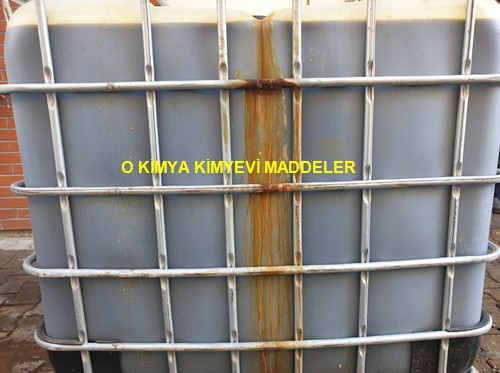
Chemical substances are packaged in packages determined by international standards. These are sold starting from the smallest package to the largest package or in bulk with tanker. These can be 1 gram packaging, 1 ton big bag packaging, the smallest drum packaging, or packaging-free sales with tanker.
All information here should be used in accordance with the legislation by expert people and professionals in the field.