

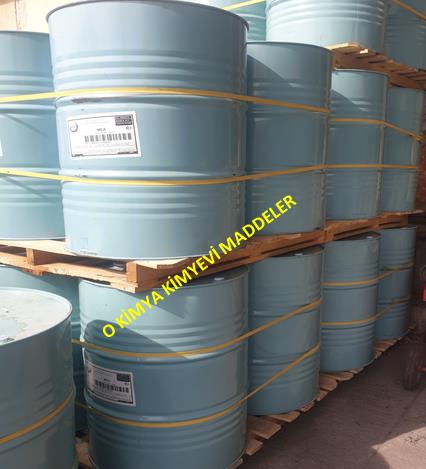
 MONOETHANOLAMINE PACKAGING
Product Documents |
|
| MONOETHANOLAMINE CERTIFICATE OF ANALYSIS | |
What is Monoethanolamine?
Molecular Formula (Monoethanolamine (MEA)): C2H7NO or H2NCH2CH2OH
Molecular Weight: 61.084 g/mol
Chemical Name: Ethanolamine
CAS Number: 141-43-5
Monoethanolamine (MEA) is a viscous liquid with an ammonia odor. These are amino alcohol chemical compounds containing both alcohol and amine groups.
Monoethanolamine is widely distributed in biological tissues and is a component of lecithin. It is a chemical compound with an organic structure.
Monoethanolamine is also referred to as ethanolamine.
Other Names are as Follows;
- Ethanolamine
- 2-hydroxyethylamine
- Glycinol
- Beta-Hydroxyethylamine
- 2-Aminoethyl alcohol
- 2-Ethanolamine
- Monoethanolamine
- Monoethanolamine
- 2-Aminoethanol
- 1-Amino-2-Hydroxyethane
- 141-43-5
- Aminoethanol
- 2-Aminoethan-1-ol
- Ethanol-2-Amino
- MEA
How is Monoethanolamine Produced?
It is produced by the reaction of ethylene oxide and Ammonia. Mono, di, and tri alkanolamines are produced in the reactor. In the following process, they are sent to downstream distillation columns for separation. The reaction in the production process is exothermic, meaning it releases heat during the production phase.
In the MEA production process, reaction rates decrease as the oxide carbon number increases. For example, the amount of ethanolamine produced from ethylene oxide is greater than the amount of monoethanolamine produced from propylene oxide. The amount produced from propylene oxide is greater than the amount of monoethanolamine produced from butylene oxide.
Anhydrous ammonia or aqueous ammonia can be used in its production. However, anhydrous ammonia is used to support its production. If anhydrous ammonia is used, the reactor must carry out production at higher temperature and pressure.
Additionally, the ammonolysis of Ethylene Oxide is prepared on a large scale. It is also obtained from nitromethane and formaldehyde.
What are the Physical and Chemical Properties of Monoethanolamine (MEA)?
Monoethanolamine (MEA) has an unpleasant odor. It is a viscous, hygroscopic amino alcohol derivative.
In appearance, it is a clear and colorless liquid. It possesses moderately toxic properties and produces toxic nitrogen oxides during combustion.
It is in solid form below 51 °F.
The boiling point is 171 °C.
The flash point is 186 °C.
Ethanolamine has a solubility of 1000 mg/L at 25 °C. It is miscible with Methanol, Acetone, and Glycerin.
Its solubility in some chemicals is as follows:
- Solubility in:
- 1.4% in Benzene
- 2.1% in Ether
- 0.2% in Carbon Tetrachloride
- Less than 0.1% in N-heptane
Its density is 1.02 g/cm3.
How does Monoethanolamine (MEA) use affect Carbon Steel?
Corrosion occurs over time in carbon steel materials. To prevent corrosion, we subject the steel to certain chemical substances. To prevent corrosion that may occur on carbon steel, MEA is used by being modified with certain chemicals.
As a result of research, it has been determined that corrosion on carbon steel is prevented by using monoethanolamine.
What are the Usage Areas of Monoethanolamine (MEA)?
- The most common and intensive area of use in the world is to remove CO2 and H2S from natural gas in areas where natural gas drilling is performed. That is, it performs gas cleaning and amine scrubbing processes here. It acts as an absorbent and has CO2 and H2S scavenging properties.
- Among its usage areas, it is used as an intermediate chemical in the production of surfactants for detergents and cleaning agents, rather than just the manufacture of wood preservatives.
- It serves as an organic solvent in the paint and pulp industry. It is added to wood pulps during the cooking of lignin pulp and helps in the determination of the amount within the wood.
- In the cosmetics industry, it is used as a pH buffering agent in the composition of hair lightening creams.
- It is used together with some moisturizing agents to neutralize carboxylic acids in some fast-acting cosmetic formulations to prevent hyperpigmentation and aging of the skin. It is an active ingredient along with Vitamin B and flavonoids.
- Monoethanolamine is used to accelerate the dyeing of fibrous materials and to deepen the coloration in such materials.
- To prevent the oxidative degradation of this amine compound, Potassium Iodide is used as a stable salt in the brine amine solvent.
What are the Other Usage Areas?
- It is used as a surfactant and has properties as a fluorimetric reagent.
- For cleaning deposits on metal surfaces and purifying the surface, this weak base MEA is used with Hydrochloric Acid, which is a strong acid.
- It is used as an alkaline maintenance agent in soaps, detergents, paints, and textile agents.
- Monoethanolamine (MEA) acts as a pH adjuster in some cases. Some ethanolamine salts act as hair fixatives and preservatives.
- This raw material is a 1st generation monoethanolamine with antihistamine properties.
- It is used in the manufacture of some paint strippers. In this application, N-Methyl-2-Pyrrolidone is the paint stripping agent. In addition to these, formic acid or monoethanolamine are known as stripping accelerators.
- When agricultural chemicals are used, it remains on the plant leaves or surface without dispersing. It is used as a dispersing agent in agricultural chemicals.
- It is used in the manufacture of ion exchange chemicals in the chemical industry.
- It is a main component in the manufacture of liquid chemicals used in closed-circuit systems.
- Monoethanolamine is used in the formulas of packaging and printing inks to control the pH value in the manufacture of printing inks.
- Used in textile manufacturing, it provides wetting properties by being used in textile additives.
- It is used in the wood processing industry for the preservation of wood.
- For gas purification and carbon capture, gas infused into MEA has its Sulfur Dioxide and Nitrogen absorbed by the MEA. Gas purified from such pollutants is released into the environment more safely.
- It is among the organic bases used in the production of corrosion-resistant metallic pigments. Monomethylamine, Dimethylamine, and Trimethylamine can also be used in this application. The most important component of this application is silicon dioxide.
- Acidic gas pollutants are found in petroleum gas. These pollutants are H2S (Hydrogen Sulfide), mercaptans, and sulfur compounds. It is a compound used to remove these pollutants in petroleum gas.
- It is used as an alkaline source in the production of cleaning solutions. These solutions ensure the removal of layers causing contamination.
- Contaminated gas is first sent into an absorption tower or contactor. Acidic impurities are absorbed by sending the Amine solution from the opposite direction.
- Ethanolamine solutions are used to absorb CO2 gases emitted from factory chimneys. For optimum efficiency, an ethanolamine solution in the range of 40%-50% is used. For the best carbon dioxide absorption, it should be at these values by weight.
- H2S released during H2S removal is transferred to another process for elemental sulfur production.
- In the manufacture of foliar fertilizers, it is a safer raw material for adjusting pH due to its soft alkaline property, which reduces the risk of phytotoxicity and inhibits the formation of toxic residues in the plant.
What are the Factors Affecting Prices?
It is directly proportional to the prices of the chemicals used in production. As the prices of Ethylene Oxide and Ammonia increase, the price of Monoethanolamine (MEA) will increase.
The price of Monoethanolamine (MEA) depends on natural gas production, as its use in natural gas production has increased. This has driven prices up.
As the usage area of Monoethanolamine (MEA) increases, prices will rise because the chemical substance produced will not meet the demand for the Monoethanolamine used.