

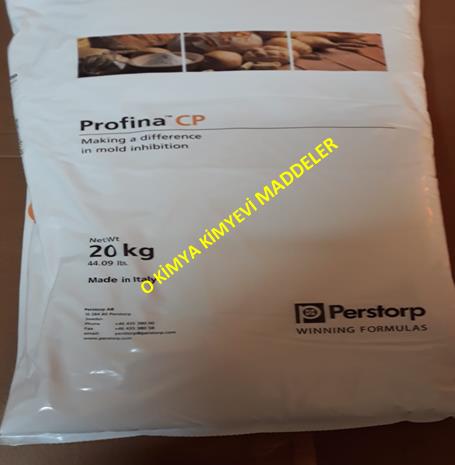
 CALCIUM PROPIONATE PACKAGING 20KG
Product Documents |
|
| CALCIUM PROPIONATE ANALYSIS CERTIFICATE | |
What is Calcium Propionate?
Molecular Formula (Calcium Propionate); C6H10CaO4
Molecular Weight; 186.22 g/mol
Chemical Name; Calcium Propionate
CAS Number; 4075-81-4
It is the calcium salt of propanoic acid, also known as calcium salt and propanoic acid. It is a white powder with a pale odor.
It is the calcium salt of propanoic acid, which is considered a food antifungal agent.
Calcium Propionate is a normal intermediate product in animal metabolism and is safely consumed by animals.
While it has stronger properties than the acetic acid chemical under acidic conditions, it has a weaker property than sorbic acid, but unlike yeast, it produces free propanoic acid which has an antibacterial effect on Aspergillus niger and gas bacilli.
Other names are as follows;
- 4075-80-4
- Propanoic Acid
- Calcium Salt
- Calciumpropionate
- Calcium Propanoate
- Calcium Dipropanoate
- Pesticide Chemical
- Propionic Acid
- Propanoic Acid
- Propionic Acid Calcium Salt Hydrate
How is Calcium Propionate Produced?
This Propionate production is carried out using a membrane chemical reactor. Its production is obtained from the reaction of Calcium Hydroxide and Propionic Acid.
Calcium Hydroxide and Propionic Acid are filled into a membrane chemical reactor filled with deionized water in a weight ratio of 1/3.5-1/3.7, controlled at 50-80 °C until the pH value is in the range of 6.4 to 8.0, in alternating batches.
During the production process, the solution temperature is maintained at 70-80 °C for 30 to 40 minutes. Meanwhile, the pH value of the solution must be controlled to keep it in the range of 6.4-8.0. In this process, thanks to the membrane chemical reactor, filter pressing, crystallization, hydration, and finally drying processes are carried out to obtain Calcium Propionate in powder form.
- Ammonium Propionate
- Calcium Propionate
- Magnesium Propionate
- Sodium Propionate
- Potassium Propionate
These are Propionic Acid salts. Propionic Acid is biologically produced from the metabolic breakdown of fatty acids and amino acids.
What are the Physical and Chemical Properties?
It is a chemical in the form of a pale-smelling white powder or monoclinic crystals.
In terms of stability, it is stable at room temperature. However, its stability is affected if the temperature increases.
It has hygroscopic properties. It is incompatible with chemicals with strong oxidizing properties.
The pH of Calcium Propionate is in the range of 6.0 to 9.0.
It decomposes when heated. During this process, it decomposes and emits acidic smoke and irritating fumes.
Its solubility in water is 1g/10 ml. This means very good solubility.
The melting point is 300 °C.
Boiling Point: Information is not available.
The storage temperature should be below 30 °C.
What are the Usage Areas of Calcium Propionate?
- The most intensive area among its usage areas is the food sector. In this field, it is used together with other ingredients as a preservative and nutritional supplement in the production of food such as dough making, bread, processed meat, other bakery products, dairy products, and whey.
- It is used in this field to help reduce the sodium level in bread.
- It is used as a browning agent in processed fruits and vegetables.
- The alternative chemical that can be used instead is Sodium Propionate.
- Mold and bacteria occur if the moisture content and pH are high in phyllo dough and bread. It is used with potassium sorbate or sorbic acid to extend the shelf life of products such as phyllo and bread.
- In the beverage industry, Calcium Propionate is used to prevent the proliferation and growth of microorganisms. It acts as an inhibiting agent in this field.
- It has great effects in the pharmaceutical field. It is used in powder form in this field to benefit from its antimicrobial properties. In addition, it has important properties to delay mold formation in aloe vera therapy, which plays a key role in the treatment of many infections in the pharmaceutical sector.
- It is processed in the production of photographic chemicals and photographic materials.
- It is used in the manufacture of paint and coating chemicals, and as a surface treatment agent in the coating field.
- It is used in the manufacture of cosmetic products to prevent bacterial growth.
- It is used in the manufacture of low-yeast bakery products.
- Propionic Acid also helps control the pH of personal care products and cosmetic products.
- It has powerful effects in preventing milk fever in cows.
- It is used as an antimycotic substance in the production of granulated dry food for animals. In this application, it has preservative and mold-preventing properties.
- It is used in the manufacture of cow feed, and dog and cat food.
- Calcium Propionate can be used as a 2nd source of glycogen in vitamin capsules produced for animals.
- Bad odors and unwanted contamination may occur in the presence of fungal microorganisms in food and cosmetic products. This is an unpleasant situation for the user. For this, some organic acids and their salts are used. The combined use of a spice oil with Calcium Propionate creates a synergistic effect and prevents fungal growth.
What Factors Affect the Prices?
In terms of price, it is directly proportional to the prices of the chemicals used in its production. As the price of Calcium Hydroxide increases, the price of this chemical will increase. As the price of Propionic Acid increases, the price of Calcium Propionate will increase.
Prices are inversely proportional to the stocks of companies that sell Calcium Propionate. As the stocks of companies selling raw materials increase, the price will decrease. Because there is sufficient chemical stock to meet the raw material demand in the market.
Prices are inversely proportional to the number of companies producing Calcium Propionate. As the number of producing companies increases, the prices will decrease.
Calcium Propionate prices are directly proportional to its usage areas. As the usage area increases, the price will increase.