

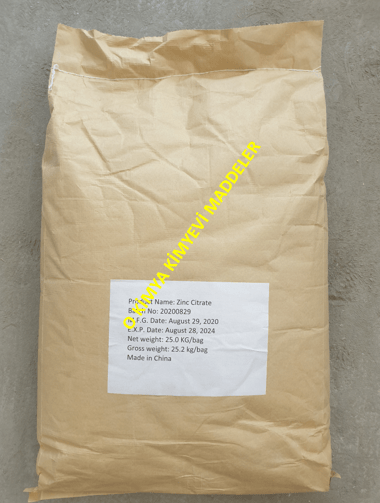
 ZINC CITRATE PACKAGING
Product Documents |
|
ZINC CITRATE ANALYSIS CERTIFICATE |
|
What is Zinc Citrate?
Molecular Formula (Zinc Citrate): C12H10O14Zn3
Molecular Weight: 574.37 g/mol
Chemical Name: Zinc Citrate
CAS Number: 546-46-3
It is the zinc salt of Citric Acid. It is an essential trace element necessary for the immune system. Zinc is an essential mineral active in many biological processes. For this reason, it is not produced naturally by the body. Therefore, it is taken externally as dietary supplements.
People experiencing excessive sweating are subject to zinc loss. The skin is where zinc is most concentrated in the human body. The element zinc is an element that helps the immune system function properly.
It is the compound with the highest zinc content. Under appropriate production conditions, the zinc content in this compound can reach up to 31%.
Dihydrate and Trihydrate forms are available. That is, it can exist as compounds with 2 or 3 water molecules (dihydrate and trihydrate).
Other Names Are As Follows;
- Citric Acid Zinc Salt
- Trizinc; 2-hydroxypropane-1,2,3-tricarboxylate
- Trizinc dihydrate
- 546-46-3
How is Zinc Citrate Produced?
Zinc citrate production is achieved through the high-purity neutralization of citric acid with a zinc source. During the production process, a precipitation reaction occurs, followed by a dehydration reaction.
What are the Physical and Chemical Properties?
It is in powder form in terms of physical appearance.
There is insufficient information regarding the melting and boiling points.
Density: 1.8 – 2.0 g/cm³
In terms of solubility, it does not have sufficient solubility in water. It dissolves in dilute mineral acids and alkali hydroxides. Dilute mineral acids may include Sulfuric Acid. It dissolves in Calcium Hydroxide and Magnesium Hydroxide solutions.
What are the Application Areas of Zinc Citrate?
- It has the ability to strengthen and support the immune system. Due to its chemical structure, the zinc element it contains is a trace mineral. Thanks to the zinc mineral in its structure, it has the ability to fight diseases. Therefore, it is used in the manufacture of pharmaceutical and non-pharmaceutical tablets and capsules.
- It is used in the production of mouthwashes used in the healthcare sector. Zinc Gluconate and Zinc Oxide raw materials have higher solubility.
- It is used in the production of lozenges recommended by doctors for the treatment of patients with sore throats.
- It contributes to the development of many metabolic processes, including the protection of bones, fertility, and reproduction. For this, it is used in the manufacture of supplements. It stands out with its high absorption property in additives used as zinc supplements.
- It is used as an anti-plaque agent in the manufacture of oral care products.
- Due to its anti-inflammatory properties, zinc citrate is used as a raw material in medicines produced to strengthen the immune system against cold weather conditions.
- It is used as an antibacterial agent in some cosmetic products.
What are the Factors Affecting Prices?
Zinc Citrate prices are primarily directly dependent on the prices of the chemical compounds used in its production. When the price of Citric Acid increases, the prices of this chemical compound also increase.
Zinc Citrate price is directly proportional to its areas of use. As the areas of use increase, prices move upward. Especially with the widespread use in the pharmaceutical industry, Zinc Citrate prices have risen.
The biggest factor affecting the costs of chemical substances is logistical costs. As the distance to the area of use increases, the price of this chemical compound increases.