

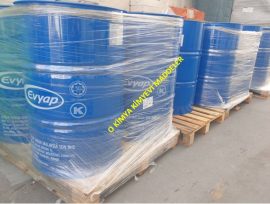
 ISOPROPYL PALMITATE PACKAGING
Product Documents |
|
| ISOPROPYL PALMITATE CERTIFICATE OF ANALYSIS | |
What is Isopropyl Palmitate?
Molecular Formula (Isopropyl Palmitate): C19H38O2
Molecular Weight: 298.5 g/mol
Chemical Name: Isopropyl Hexadecanoate
CAS Number: 142-91-6
As the name suggests, it is the fatty acid ester of isopropyl alcohol and palmitic acid. It is the most commonly used type among fatty acid esters. Another prominent fatty acid ester is isopropyl myristate.
This chemical compound, which is an ester derivative, contains a large fatty acid within its palmitic part. This fatty acid consists of Vitamin A and antioxidants. It has excellent moisturizing and penetrating properties. It also has thickening properties.
Other Names are as Follows;
- CAS no 142-91-6
- Isopropyl Hexadecanoate
- Palmitic acid, isopropyl ester
- Isopropyl palmitate
- Isopropyl Ester
- 1-methylethyl hexadecanoate
How is it Produced?
Isopropyl Palmitate production is achieved through an esterification reaction of palmitic acid and isopropyl alcohol at low temperatures in the presence of an acid catalyst. This reaction yields high-purity products that are commercially marketed.
What are the Physical and Chemical Properties?
In terms of physical appearance, it is a clear and colorless liquid.
The biggest commercial problem with Isopropyl Palmitate is that it freezes below 16 °C.
The melting point is between 11 °C and 13 °C.
The boiling point is 160 °C.
Its density is 0.852 g/ml at 25 °C.
In terms of solubility, it is immiscible with water. It dissolves well in acetone, ether, benzene, and ethyl alcohol.
Upon heating, it decomposes and emits acrid smoke.
What are the Usage Areas of Isopropyl Palmitate?
- Used in pharmaceutical applications to provide moisturizing and emollient properties.
- Used as a binding and softening agent in wet wipe production.
- Used in the cosmetics industry as non-allergenic and non-toxic moisturizers. This is because this compound is metabolized by enzymes.
- Used in eye makeup and creams as an emollient, dispersing agent, and film-forming substance.
- IPP is used in lipstick production to create high-staining formulas.
- Used to provide adhesive properties when making tablets and cakes.
- Used to provide consistency in dermatological emulsion preparations. It has a viscosity-regulating effect. Generally, rheology can be adjusted in emulsion-based preparations. Additionally, it contains 20-120 mPas liquid paraffin.
- Used in sunscreens to provide moisturizing and emollient properties.
- Used in the manufacture of non-parenteral drugs.
- Used in alcohol-based hair lotions in the cosmetic industry and in the manufacture of aftershave cosmetic products.
- Used as a moisturizing agent in the manufacture of topical creams.
What Factors Affect Its Prices?
The price of isopropyl palmitate is directly dependent on the prices of the raw materials used in its production. As coconut oil and palm oil prices increase, the prices will also increase.
As the stocks of companies that are distributors of isopropyl palmitate increase, prices will experience short-term decreases.
As Isopropyl Alcohol prices increase, isopropyl palmitate prices will increase.
The price of isopropyl palmitate is directly dependent on its areas of use. As the areas of usage expand, prices will increase.